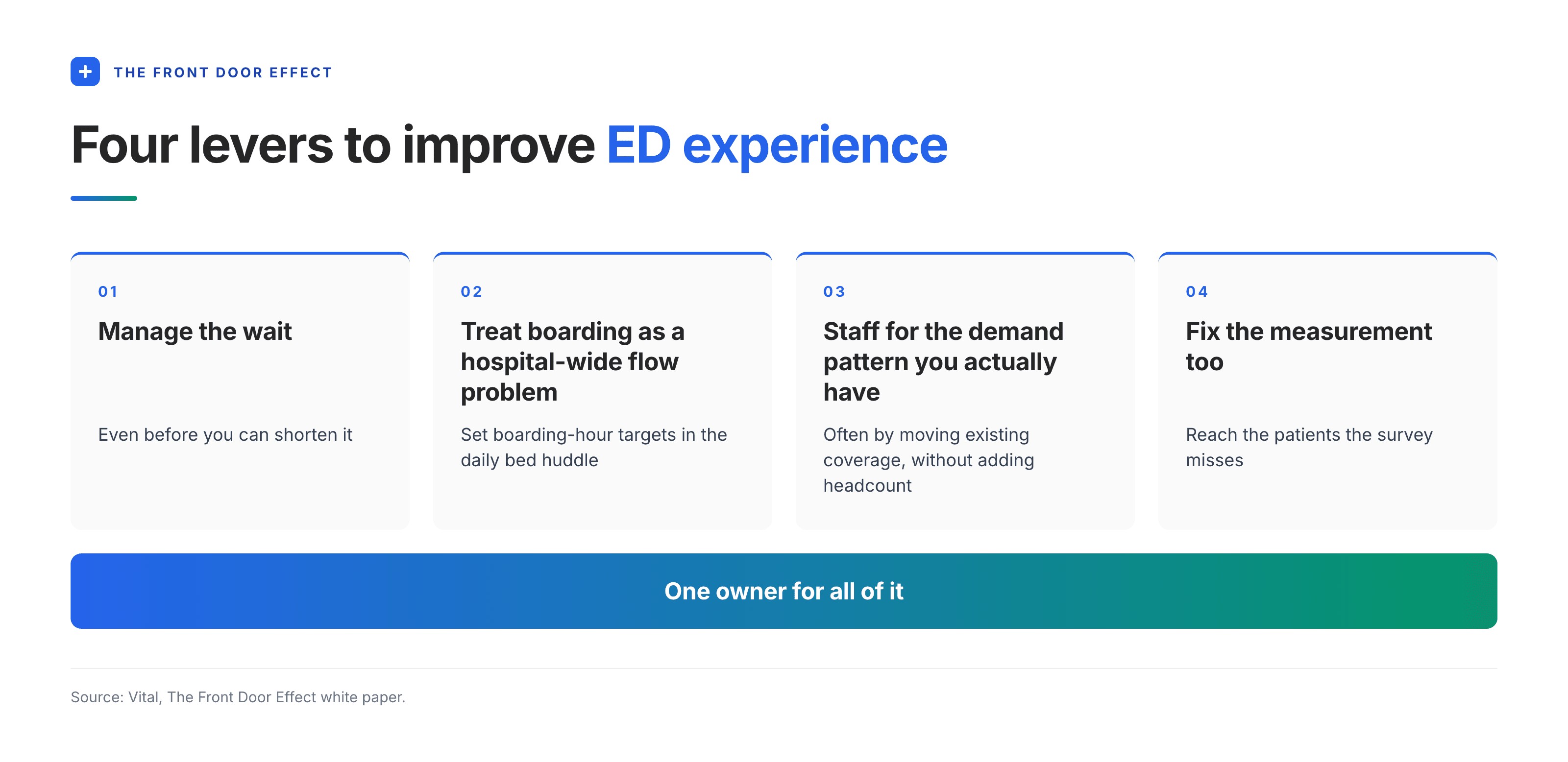
Diagnosing the ED experience problem is the easy part. Here are four levers, in an order any patient experience or quality leader could start on this week.
Lever one: manage the wait, even before you can shorten it
You don't need to fix throughput overnight to improve how a wait feels. A field experiment found satisfaction rose roughly 21% just from giving patients a wait-time estimate, whether or not the wait itself got shorter. The bigger opportunity is boarding: a boarded patient needs to hear why they haven't moved to a floor bed yet, not a generic “we're working on it.” Clinical and operational strain build up most visibly during boarding, so it's the most valuable place to add proactive communication.
Lever two: treat boarding as a hospital-wide flow problem
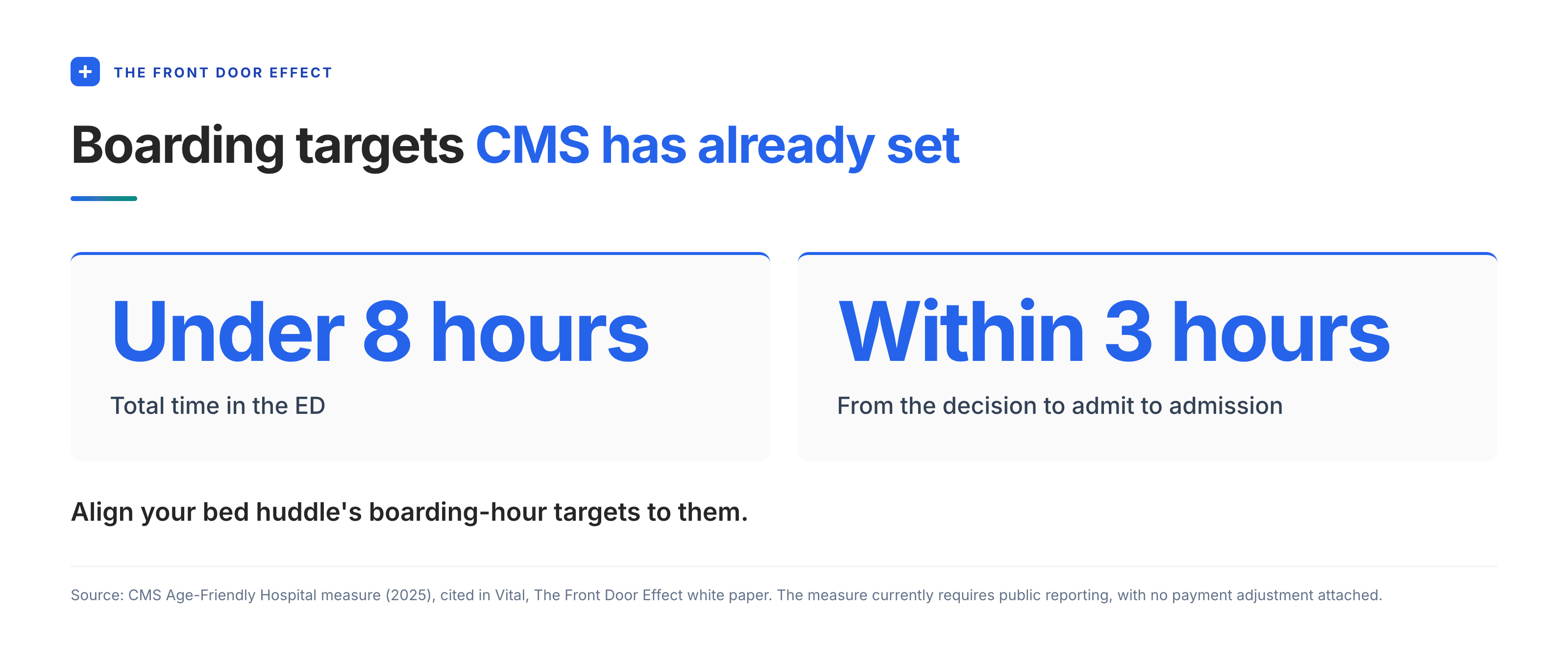
Most hospitals already run daily bed huddles to manage expected discharges and admissions. What's usually missing is a clear owner for how those decisions get communicated to patients on both sides. Set boarding-hour targets inside that existing huddle, aligned to CMS's Age-Friendly Hospital measure (under 8 hours total ED stay, admission within 3 hours of the decision to admit). And look upstream: boarding is often caused by inpatient units discharging patients late in the day, rather than a lack of ED capacity.
Lever three: staff for the demand pattern you actually have
Most patient-experience and rounding staff work daytime hours on inpatient units, which is the opposite of where and when the evidence shows ED experience is decided. Closing that gap is often a matter of moving existing coverage to a narrow, high-stakes window, without adding headcount. Those staff still need a tool built for the ED. Legacy rounding software is generally built around inpatient logic (fixed units and scheduled sweeps), which makes it hard to see which ED patients need attention most on a given shift.
Lever four: fix the measurement too
Younger, male, and Medicaid patients, and those at risk of leaving without being seen (LWBS), are underrepresented in your survey data by design. Closing that gap takes feedback collected during the visit, in multiple languages, from a broader group of patients than the mailed survey reaches. At the same time, track boarding hours, LWBS rate, and the gap between expected and actual wait time as standing operational metrics next to your survey score, because they capture the population the survey doesn't. And audit your responder demographics against your actual ED population. That one comparison often tells you more than another quarter of the same aggregate score.
One owner for all of it
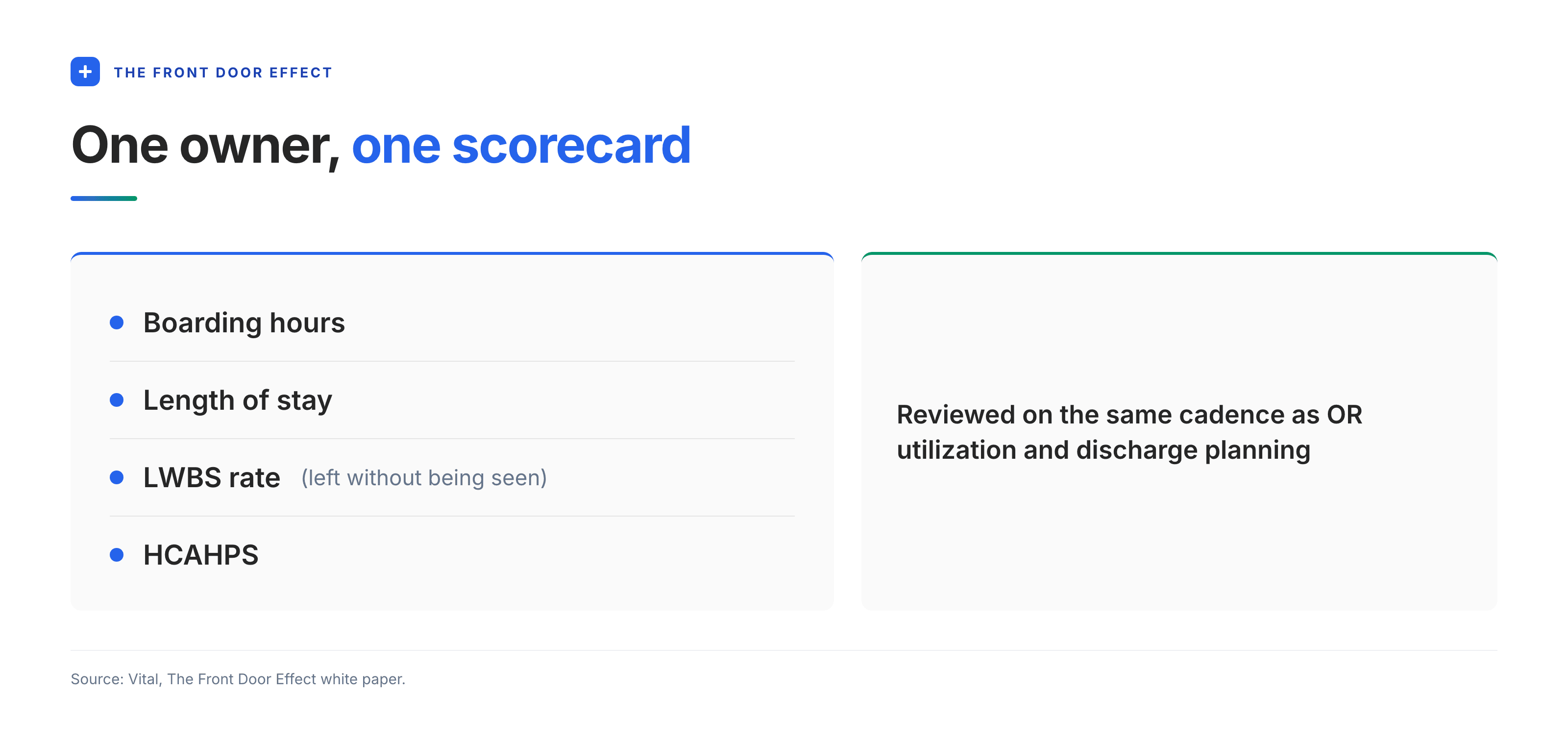
Patient experience depends on communication and operational flow, and both touch nearly every part of hospital care, so it can't sit with a single department. Our recommendation: one leader owns boarding hours, length of stay, LWBS rate, and HCAHPS together on a single scorecard, reviewed on the same cadence as OR utilization and discharge planning.